
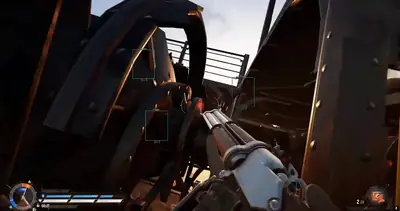
SAND: Raiders of Sophie ESP and Loot ESP Explained
ESP is the feature most SAND players ask about first. Here is what each type shows, how loot ESP changes your routes and how to keep the overlay clean.
In an extraction shooter, information beats firepower more often than people expect. The crew that knows where the other crew is parked usually decides how the fight starts. ESP, short for extra sensory perception, is the feature that hands you that information. In SAND: Raiders of Sophie it matters even more because the map is large, raids are long and you are carrying valuable cargo the whole time.
Here is what the different types of ESP show and how players tend to set them up.
Player ESP
Player ESP draws markers on other players, usually as boxes with distance readouts. In SAND this answers the most important question of any raid: who else is here, and where?
The practical uses are simple. Before you approach a fort or a shipwreck, you can see whether another crew is already inside. When you are on foot away from your Trampler, you can spot someone circling it. When you are deciding whether to extract now or push for one more container, you have real information instead of a guess.
NPC and creature ESP
SAND is PvPvE, so players are not the only threat. NPC ESP marks AI enemies so you can route around them, or pick a fight on your own terms. The less obvious benefit is noise. A firefight with NPCs draws attention from other crews, so knowing where NPCs are helps you avoid fights you do not want to be heard having.
Mech and evac point ESP
Tramplers are the center of the game, and a lot of the tension comes from knowing whether another mech is nearby. ESP that tracks mechs helps you judge whether a position is safe to loot or whether someone is about to roll over the hill. Evac point markers help with the other half of the loop, which is getting out. If your route to the evacuation is long, seeing the point on your overlay saves guesswork when a raid goes wrong.
Container and loot ESP
This is the type that changes how you play rather than how you fight. Container ESP shows lootable containers from a distance, and loot ESP shows items lying in the world.
SAND rewards scavenging across shipwrecks, forts, towns and other points of interest, and a lot of raid time is spent clearing rooms that turn out to be empty. With container and loot ESP you can skip dead buildings, string together a route between valuable spots and spend less time exposed. That shorter exposure is itself a safety benefit, because most ambushes happen while you are busy looting.
Keeping the overlay readable
More markers is not better. A screen full of tags makes it harder to spot the thing that matters. A few habits help.
- Turn on only what you need for the situation. Scouting a fort needs players and NPCs. A loot run through quiet ruins needs containers and items.
- Use distance readouts and set a maximum range. Seeing everything on the map is rarely useful. Seeing what is within a few hundred meters usually is. We cover this idea in detail for another game in our distance readout settings guide, and the same logic applies here.
- Pick a marker style you can read quickly. Boxes are fast to read. Other styles can look cleaner but take longer to parse. Our article on skeleton lines versus boxes goes into the tradeoffs.
- Plan a route before you move. ESP is most valuable when it feeds a decision, such as which building to hit first, not when it is just on in the background.
A note on risk
ESP does not change what the anti-cheat sees on your system. It is still a rule violation, and bans are possible. Information-only features are sometimes described as lower profile than aim assistance, but that is a general observation about how other players react, not a promise about anti-cheat. Read our buyer’s guide for a full list of what to check before purchase.
Where to get it
If you want player, NPC, mech, container and loot ESP in one package, the SAND: Raiders of Sophie ESP page lists the current features and plans.